The facts in the story rest on claims. Every claim has a status and, where there is a source, a location in it. What we don't know, we say we don't know.
Much of the story rests on Pupin's memory. Here we show honestly where there is independent confirmation and where there is none.
Questions the sources do not yet answer: what we know, where we have looked and what would settle it.
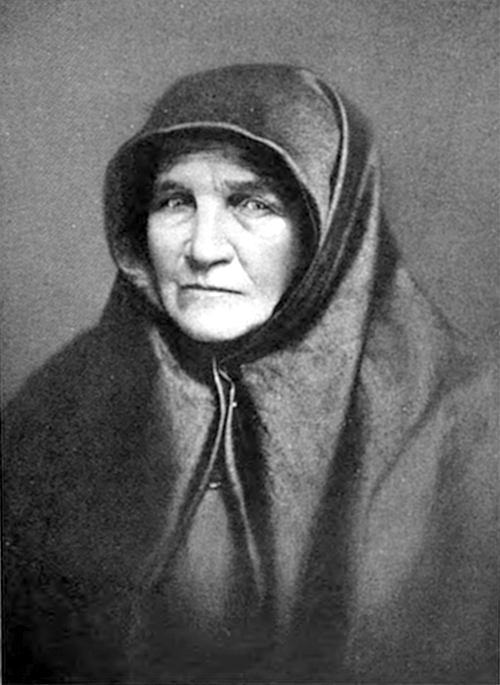
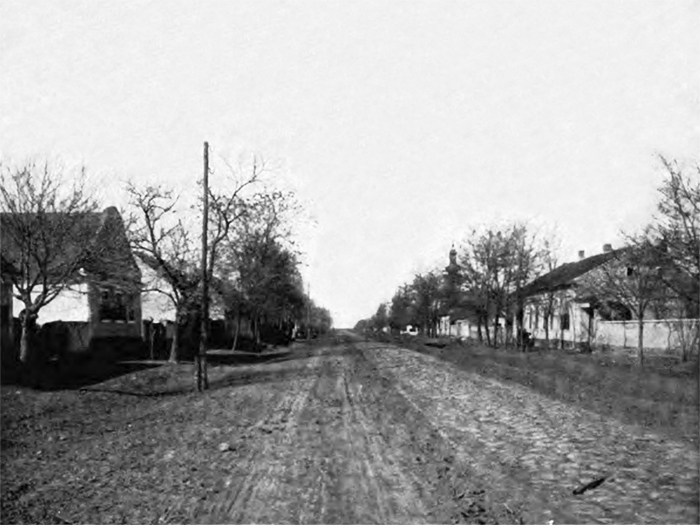
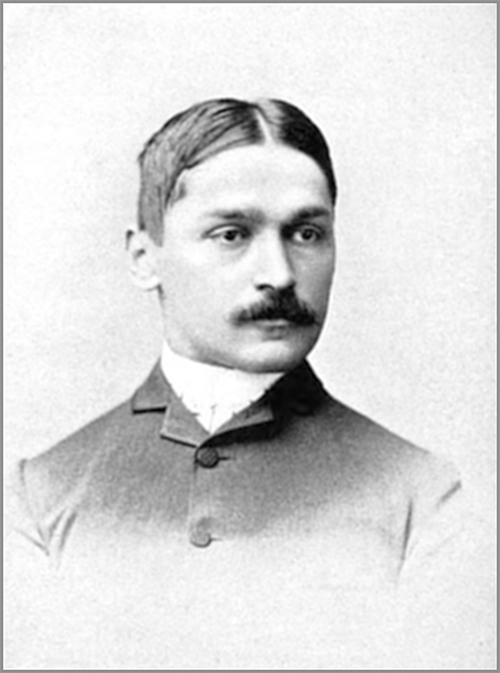
Illustrations published in the autobiography in 1923. We show them only here and in the network, not in the story.
At night on the pasture the boys pressed their ears to the ground and judged the direction and distance of a signal by its sound.
Pupin's own accountPupin wrote this decades later, in his autobiography. It is his memory and his interpretation, not independent confirmation.
“Practice made us quite expert in this form of signalling.”
Source: Michael Pupin, From Immigrant to Inventor (1923) · chapter I · “Practice made us quite expert in this form of signalling.”
Pupin himself claims that this pasture experience was the basis of a discovery he made some twenty-five years later. That is his interpretation, not independently established causation.
Pupin's own accountPupin wrote this decades later, in his autobiography. It is his memory and his interpretation, not independent confirmation.
“It is the basis of a discovery which I made about twenty-five years after my novel experiences in that herdsmen’s summer school in Idvor.”
Source: Michael Pupin, From Immigrant to Inventor (1923) · chapter I · “It is the basis of a discovery which I made about twenty-five years after”
Olimpijada could neither read nor write.
Pupin's own accountPupin wrote this decades later, in his autobiography. It is his memory and his interpretation, not independent confirmation.
Source: Michael Pupin, From Immigrant to Inventor (1923) · chapter I · “She could neither read nor write”
His mother convinced him he needed 'another pair of eyes', the eyes of reading and writing, and told him knowledge was a golden ladder.
Pupin's own accountPupin wrote this decades later, in his autobiography. It is his memory and his interpretation, not independent confirmation.
“Knowledge is the golden ladder over which we climb to heaven”
Source: Michael Pupin, From Immigrant to Inventor (1923) · chapter I · “Knowledge is the golden ladder over which we climb to heaven”
He heard of Lincoln from Baba Batikin, the village storyteller, who spoke of him as an American Prince Marko.
Pupin's own accountPupin wrote this decades later, in his autobiography. It is his memory and his interpretation, not independent confirmation.
Source: Michael Pupin, From Immigrant to Inventor (1923) · chapter I · “the name of Lincoln, whenever mentioned by Baba Batikin”
Kos, a Slovene teacher in Pančevo, convinced him that sound was a vibration of bodies, and was the first to tell him the story of Franklin and his kite.
Pupin's own accountPupin wrote this decades later, in his autobiography. It is his memory and his interpretation, not independent confirmation.
“He soon convinced me that sound was a vibration of bodies.”
Source: Michael Pupin, From Immigrant to Inventor (1923) · chapter I · “He soon convinced me that sound was a vibration of bodies.”
Pupin writes that Kos, his teacher and interpreter of physical phenomena, could not explain what the boys on the pasture knew: that sound travels through the ground far better than through the air, and better through hard ground than through ploughed soil.
Pupin's own accountPupin wrote this decades later, in his autobiography. It is his memory and his interpretation, not independent confirmation.
“Kos, the Slovenian, my teacher and interpreter of physical phenomena, could not explain this”
Source: Michael Pupin, From Immigrant to Inventor (1923) · chapter I · “Kos, the Slovenian, my teacher and interpreter of physical phenomena, could not explain this”
Kos would not answer the boy's questions about light, but he always encouraged him to keep asking.
Pupin's own accountPupin wrote this decades later, in his autobiography. It is his memory and his interpretation, not independent confirmation.
“he was greatly interested in my childlike inquiries and always encouraged me to go on with my puzzling questions.”
Source: Michael Pupin, From Immigrant to Inventor (1923) · chapter I · “always encouraged me to go on with my puzzling questions”
Pupin writes that Kos was a Slovene, a native of a valley in Carniola. He does not name the valley. Nowhere in the book does he give Kos's first name.
Pupin's own accountPupin wrote this decades later, in his autobiography. It is his memory and his interpretation, not independent confirmation.
“Kos was a Slovene, a native of that beautiful valley in Carniola, in the very bosom of the Dolomites”
Source: Michael Pupin, From Immigrant to Inventor (1923) · chapter III · “Kos was a Slovene, a native of that beautiful valley in Carniola”
At Kos's house, Father Vasa Živković and a preacher suggested the boy move to the schools of Prague and said the question of money could be solved.
Pupin's own accountPupin wrote this decades later, in his autobiography. It is his memory and his interpretation, not independent confirmation.
Source: Michael Pupin, From Immigrant to Inventor (1923) · chapter I · “they suggested that I might be transferred from the school in Panchevo to the famous schools of Prague”
Pupin writes that he will never forget the name of Vasa Živković, because of the friendship the priest gave him.
Pupin's own accountPupin wrote this decades later, in his autobiography. It is his memory and his interpretation, not independent confirmation.
“His name, Vasa Zhivkovich, I shall never forget, because it is sweet music to my ears”
Source: Michael Pupin, From Immigrant to Inventor (1923) · chapter I · “His name, Vasa Zhivkovich, I shall never forget”
When the Hungarian authorities said after a nationalist procession that the boy must go back to Idvor, Kos and Father Živković intervened and he stayed.
Pupin's own accountPupin wrote this decades later, in his autobiography. It is his memory and his interpretation, not independent confirmation.
Source: Michael Pupin, From Immigrant to Inventor (1923) · chapter I · “Kos, the Slovenian, and protoyeray Zhivkovich interfered, and I was permitted to stay.”
At the May Day festival the boy was caught in a scuffle with the Austrian flag under his feet. Expulsion loomed. Father Živković defended him again.
Pupin's own accountPupin wrote this decades later, in his autobiography. It is his memory and his interpretation, not independent confirmation.
“Expulsion from school stared me in the face. Again protoyeray Zhivkovich came to my defense”
Source: Michael Pupin, From Immigrant to Inventor (1923) · chapter I · “Again protoyeray Zhivkovich came to my defense”
We derive the date 1 May 1872 from the order of the text: Pupin describes Miletić's visit 'in the early spring of 1872', then 'the first of May, following'. Pupin does not give the full date himself.
Our inferenceWe infer this from the sources. The source does not say it outright.
Open question: Confirm against Pančevo school or church records if available (see Cucić).
At the priest's invitation his parents came to Pančevo. The meeting ended in a 'triumph' for his mother: the boy would go to Prague.
Pupin's own accountPupin wrote this decades later, in his autobiography. It is his memory and his interpretation, not independent confirmation.
Source: Michael Pupin, From Immigrant to Inventor (1923) · chapter I · “In response to an invitation from the protoyeray, father and mother came to Panchevo to a conference”
The priest and his congregation promised help if schooling in Prague proved too heavy for his parents.
Pupin's own accountPupin wrote this decades later, in his autobiography. It is his memory and his interpretation, not independent confirmation.
Source: Michael Pupin, From Immigrant to Inventor (1923) · chapter I · “The protoyeray and his congregation promised assistance”
According to Cucić, Živković argued before the Orthodox church community board for a scholarship for the poor pupil Pupin.
Scholarly or institutional sourceWork by a researcher or institution, based on other sources.
Source: Dragoljub A. Cucić, Michael Idvorsky Pupin and father Vasa Živković (2008) · see paper
Open question: Year conflict: Cucić gives 1870, the Muzej Vojvodine catalogue gives 1871. Do not publish a year until the archival document is checked.
He carried two letters of introduction from Father Živković to Prague, for Rieger and for Palacký.
Pupin's own accountPupin wrote this decades later, in his autobiography. It is his memory and his interpretation, not independent confirmation.
Source: Michael Pupin, From Immigrant to Inventor (1923) · chapter I · “two letters from protoyeray Zhivkovich introducing me to Rieger and to Palacky”
For months he lacked the courage to deliver the letters. Only when the priest wrote asking why did he go.
Pupin's own accountPupin wrote this decades later, in his autobiography. It is his memory and his interpretation, not independent confirmation.
Source: Michael Pupin, From Immigrant to Inventor (1923) · chapter I · “asking why I had not delivered the letters of introduction”
On the way to Prague, while an official threatened him, an elderly couple stepped into the conversation. His ticket from Vienna to Prague was paid. They were Americans.
Pupin's own accountPupin wrote this decades later, in his autobiography. It is his memory and his interpretation, not independent confirmation.
“You had two splendid teachers, your father and your mother”
Source: Michael Pupin, From Immigrant to Inventor (1923) · chapter I · “my ticket from Vienna to Prague by the short route was paid for”
On the train they told him stories of Benjamin Franklin, of Lincoln and of America, and urged him to read Harriet Beecher Stowe's “Uncle Tom's Cabin”.
Pupin's own accountPupin wrote this decades later, in his autobiography. It is his memory and his interpretation, not independent confirmation.
Source: Michael Pupin, From Immigrant to Inventor (1923) · chapter I · “They returned the compliment by telling me stories of Benjamin Franklin, of Lincoln, and of America”
Rieger, a leader of the Czech nationalists, advised the boy, who had fallen in with a revolutionary set in Prague, to study more and spend less time on nationalist agitation.
Pupin's own accountPupin wrote this decades later, in his autobiography. It is his memory and his interpretation, not independent confirmation.
“if I would only spend more time on my books and less on my nationalist chums”
Source: Michael Pupin, From Immigrant to Inventor (1923) · chapter I · “if I would only spend more time on my books and less on my nationalist chums”
Palacký gave him a book about Jan Hus and promised help if he ever needed it.
Pupin's own accountPupin wrote this decades later, in his autobiography. It is his memory and his interpretation, not independent confirmation.
Source: Michael Pupin, From Immigrant to Inventor (1923) · chapter I · “assured me of assistance if I should ever need it”
Pupin admits he studied in Prague only as much as he had to, and so never asked Pančevo for the help it had promised.
Pupin's own accountPupin wrote this decades later, in his autobiography. It is his memory and his interpretation, not independent confirmation.
Source: Michael Pupin, From Immigrant to Inventor (1923) · chapter I · “they did not appeal to my Panchevo friends for the additional help which they had promised”
In Prague a letter came from his sister: his father had died suddenly.
Pupin's own accountPupin wrote this decades later, in his autobiography. It is his memory and his interpretation, not independent confirmation.
Source: Michael Pupin, From Immigrant to Inventor (1923) · chapter I · “my father had died suddenly after a very brief illness”
He wanted to return to Idvor and help his mother with the land. She would not hear of it and insisted he stay in Prague.
Pupin's own accountPupin wrote this decades later, in his autobiography. It is his memory and his interpretation, not independent confirmation.
“But she would not listen, and insisted that I stay in Prague”
Source: Michael Pupin, From Immigrant to Inventor (1923) · chapter I · “insisted that I stay in Prague”
To raise the fare he sold his books, his watch and his clothes, including the yellow sheepskin coat. He kept a red fez nobody would buy.
Pupin's own accountPupin wrote this decades later, in his autobiography. It is his memory and his interpretation, not independent confirmation.
Source: Michael Pupin, From Immigrant to Inventor (1923) · chapter I · “My books, my watch, my clothes, including the yellow sheepskin coat”
The ship Westphalia sailed from Hamburg for America on 12 March 1874.
Pupin's own accountPupin wrote this decades later, in his autobiography. It is his memory and his interpretation, not independent confirmation.
Source: Michael Pupin, From Immigrant to Inventor (1923) · chapter I · “on the twelfth day of March, 1874”
He brought five cents to America and spent them at once on a prune pie that turned out to be full of pits.
Pupin's own accountPupin wrote this decades later, in his autobiography. It is his memory and his interpretation, not independent confirmation.
Source: Michael Pupin, From Immigrant to Inventor (1923) · chapter I · “I brought five cents, and immediately spent it”
Before the examiners he admitted that he knew nobody in America except Franklin, Lincoln and Harriet Beecher Stowe.
Pupin's own accountPupin wrote this decades later, in his autobiography. It is his memory and his interpretation, not independent confirmation.
Source: Michael Pupin, From Immigrant to Inventor (1923) · chapter I · “nobody in this country except Franklin, Lincoln, and Harriet Beecher”
The one-legged examiner told him in German that he had shown good taste in his American acquaintances.
Pupin's own accountPupin wrote this decades later, in his autobiography. It is his memory and his interpretation, not independent confirmation.
“You showed good taste when you picked your American acquaintances.”
Source: Michael Pupin, From Immigrant to Inventor (1923) · chapter I · “You showed good taste when you picked your American acquaintances.”
Pupin later writes that those three names won him the sympathy of the officials at Castle Garden, who might otherwise have deported him.
Pupin's own accountPupin wrote this decades later, in his autobiography. It is his memory and his interpretation, not independent confirmation.
“My mention of the name of this great woman, together with the names of Lincoln and of Franklin, as Americans that I knew something about, had won me the sympathy of the immigration officials at Castle Garden, who, otherwise, might have deported me.”
Source: Michael Pupin, From Immigrant to Inventor (1923) · chapter IV · “had won me the sympathy of the immigration officials at Castle Garden”
One of the examiners at Castle Garden had only one leg. He was Swiss, a veteran of the American Civil War. We do not know his name.
Pupin's own accountPupin wrote this decades later, in his autobiography. It is his memory and his interpretation, not independent confirmation.
“You showed good taste when you picked your American acquaintances.”
Source: Michael Pupin, From Immigrant to Inventor (1923) · chapter I · “One of the officials, who had one leg only, and walked with a crutch”
While he was being questioned, the veteran nodded. Then he whispered something to the others, and they let him through.
Pupin's own accountPupin wrote this decades later, in his autobiography. It is his memory and his interpretation, not independent confirmation.
“He whispered something to the other officials, and they finally informed me that I could pass on”
Source: Michael Pupin, From Immigrant to Inventor (1923) · chapter I · “He whispered something to the other officials”
Later the veteran looked him up and told him the examiners had made an exception for him.
Pupin's own accountPupin wrote this decades later, in his autobiography. It is his memory and his interpretation, not independent confirmation.
Source: Michael Pupin, From Immigrant to Inventor (1923) · chapter I · “the examiners had made an exception in my favor”
That the one-legged veteran's whisper decided it is our inference. Pupin describes the whisper and the outcome, but not what was said.
Our inferenceWe infer this from the sources. The source does not say it outright.
On his first evening on the Delaware farm, a girl he privately called the Vila pointed him to paper and ink. That evening he wrote to his mother.
Pupin's own accountPupin wrote this decades later, in his autobiography. It is his memory and his interpretation, not independent confirmation.
Source: Michael Pupin, From Immigrant to Inventor (1923) · chapter II · “She certainly felt my thoughts.”
Every evening she taught him English words and corrected every mistake. She called him 'smart'.
Pupin's own accountPupin wrote this decades later, in his autobiography. It is his memory and his interpretation, not independent confirmation.
“She called me “smart,” and I never forgot the word.”
Source: Michael Pupin, From Immigrant to Inventor (1923) · chapter II · “and I never forgot the word”
He moved to the East Side to be near the Cooper Union library. He spent hours there after work, or after another day of failing to find work.
Pupin's own accountPupin wrote this decades later, in his autobiography. It is his memory and his interpretation, not independent confirmation.
“It was my spiritual refuge when things looked black and hopeless.”
Source: Michael Pupin, From Immigrant to Inventor (1923) · chapter II · “It was my spiritual refuge when things looked black and hopeless.”
Jim, the fireman and boiler-room engineer at the cracker factory on Cortlandt Street, let him into the boiler room and patiently explained the steam engine.
Pupin's own accountPupin wrote this decades later, in his autobiography. It is his memory and his interpretation, not independent confirmation.
“He was my first professor in engineering.”
Source: Michael Pupin, From Immigrant to Inventor (1923) · chapter III · “He was my first professor in engineering.”
When the boy wanted to become a licensed fireman, Jim refused to help and told him to aim higher.
Pupin's own accountPupin wrote this decades later, in his autobiography. It is his memory and his interpretation, not independent confirmation.
“You must aim higher, my lad”
Source: Michael Pupin, From Immigrant to Inventor (1923) · chapter III · “You must aim higher, my lad”
Pupin writes that in never missing a chance to encourage him, Jim reminded him much of his mother.
Pupin's own accountPupin wrote this decades later, in his autobiography. It is his memory and his interpretation, not independent confirmation.
“In that respect he reminded me much of my mother.”
Source: Michael Pupin, From Immigrant to Inventor (1923) · chapter III · “In that respect he reminded me much of my mother.”
Jim talked him into joining Cooper Union evening classes. Afterwards the boy explained the lectures back to him.
Pupin's own accountPupin wrote this decades later, in his autobiography. It is his memory and his interpretation, not independent confirmation.
Source: Michael Pupin, From Immigrant to Inventor (1923) · chapter III · “Jim had a relative attending classes at Cooper Union and encouraged me”
Bilharz, a former theology student doing the humblest work in the same factory, guided him through Greek and Latin grammar, even before the boy decided to aim for Columbia.
Pupin's own accountPupin wrote this decades later, in his autobiography. It is his memory and his interpretation, not independent confirmation.
Source: Michael Pupin, From Immigrant to Inventor (1923) · chapter IV · “My progress in Greek and Latin grammar under the guidance of Bilharz”
Bilharz corrected his accent and told him: I cannot be your Vila, but I can be your satyr.
Pupin's own accountPupin wrote this decades later, in his autobiography. It is his memory and his interpretation, not independent confirmation.
“I could not be your Vila, deformed as I am”
Source: Michael Pupin, From Immigrant to Inventor (1923) · chapter III · “I could not be your Vila, deformed as I am”
Doctor Shepard offered him a job and brought in a friend, Professor Webster, to prepare him for the Columbia entrance exam.
Pupin's own accountPupin wrote this decades later, in his autobiography. It is his memory and his interpretation, not independent confirmation.
Source: Michael Pupin, From Immigrant to Inventor (1923) · chapter IV · “His friend was Professor Webster, who taught Greek and Latin”
When he left the factory, Jim applauded the decision and Bilharz was glad he had contributed to his progress.
Pupin's own accountPupin wrote this decades later, in his autobiography. It is his memory and his interpretation, not independent confirmation.
Source: Michael Pupin, From Immigrant to Inventor (1923) · chapter IV · “Bilharz expressed his gratification that he had contributed to my progress”
The Lukanitch family, Slovenes in New York, helped him start building a bridge over what he called his 'social unpreparedness'.
Pupin's own accountPupin wrote this decades later, in his autobiography. It is his memory and his interpretation, not independent confirmation.
Source: Michael Pupin, From Immigrant to Inventor (1923) · chapter IV · “Old Lukanitch and his family and their American friends helped me much”
In the last week of September 1879 he sat the oral entrance exams at Columbia. He knew the first two books of the Iliad and four orations of Cicero by heart.
Pupin's own accountPupin wrote this decades later, in his autobiography. It is his memory and his interpretation, not independent confirmation.
“The first two books of the Iliad, excepting the catalogue of ships, and four orations of Cicero, I knew by heart.”
Source: Michael Pupin, From Immigrant to Inventor (1923) · chapter IV · “I presented myself at Columbia for entrance examinations”
We read the year 1879 from Pupin's mention of 'summer 1879' directly before the entrance exams 'of that year'.
Our inferenceWe infer this from the sources. The source does not say it outright.
While he was studying in Berlin, a letter came from his sister: his mother had died.
Pupin's own accountPupin wrote this decades later, in his autobiography. It is his memory and his interpretation, not independent confirmation.
Source: Michael Pupin, From Immigrant to Inventor (1923) · chapter IX · “my saintly mother was no longer among the living”
Open question: Prodanović gives 1886 (family tree). Confirm with a primary record (parish register).
That day he vowed to keep his mother's memory alive. Twenty-seven years later the Serbian Academy of Sciences announced that the income of a foundation in memory of Olympiada Pupin would help poor schoolboys every year.
Pupin's own accountPupin wrote this decades later, in his autobiography. It is his memory and his interpretation, not independent confirmation.
“the income of a foundation in memory of Olympiada Pupin would be expended annually to assist a goodly number of poor schoolboys”
Source: Michael Pupin, From Immigrant to Inventor (1923) · chapter IX · “a foundation in memory of Olympiada Pupin would be expended annually to assist a goodly number of poor schoolboys”
Pupin names his pupils Armstrong and Vreeland and wonders whether some of the thrill the Serbian bagpipes stirred in him passed on to them.
Pupin's own accountPupin wrote this decades later, in his autobiography. It is his memory and his interpretation, not independent confirmation.
“Perhaps some of those thrills which the Serbian bagpiper stirred up in me in my early youth were transferred to my pupils, Armstrong and Vreeland.”
Source: Michael Pupin, From Immigrant to Inventor (1923) · chapter I · “were transferred to my pupils, Armstrong and Vreeland”
Pupin calls Edwin Howard Armstrong, whose inventions helped bring broadcasting, his former pupil and research associate.
Pupin's own accountPupin wrote this decades later, in his autobiography. It is his memory and his interpretation, not independent confirmation.
Source: Michael Pupin, From Immigrant to Inventor (1923) · chapter XII · “my former pupil and research associate, Major E. H. Armstrong”
Columbia University states that its first graduate students, among them Armstrong and John H. Morecroft, received early inspiration from Pupin.
Scholarly or institutional sourceWork by a researcher or institution, based on other sources.
Source: Columbia University, Department of Electrical Engineering, Michael Idvorsky Pupin (n.d.)
Open question: Morecroft appears only in Columbia's profile; check his own account or a biography.
According to Columbia, Pupin played a critical role in starting the National Research Council. The last chapter of the autobiography is devoted to it.
Scholarly or institutional sourceWork by a researcher or institution, based on other sources.
Source: Columbia University, Department of Electrical Engineering, Michael Idvorsky Pupin (n.d.)
That the help kept travelling through his students' students is our inference. We do not trace individual threads beyond Armstrong and Morecroft here.
Our inferenceWe infer this from the sources. The source does not say it outright.
The Museum of Vojvodina gives 9 October 1854. American sources, including catalogues of his books, often give 1858. We decline to use the dispute as a curiosity; we state it transparently.
Scholarly or institutional sourceWork by a researcher or institution, based on other sources.
Source: Muzej Vojvodine, Michael I. Pupin / Михајло И. Пупин (exhibition catalogue) (2021) · catalogue
Open question: Read the catalogue's explanation of how 1858 arose and cite the page.
His parents: Kosta Pupin (1814–1873) and Olimpijada, née Milovanov (1814–1886); written Alimpijada in the family tree.
Scholarly or institutional sourceWork by a researcher or institution, based on other sources.
Source: Jelena Prodanović, Mihajlo Pupin: ilustrovana zbirka istorijskih i dokumentarnih zapisa (2026) · Porodično stablo Mihajla Pupina
Open question: Confirm both death years with church registers (Idvor parish) or the Idvor museum.
His father, Kosta Pupin, died in 1873, while Mihajlo was in Prague.
Scholarly or institutional sourceWork by a researcher or institution, based on other sources.
Source: Jelena Prodanović, Mihajlo Pupin: ilustrovana zbirka istorijskih i dokumentarnih zapisa (2026) · Porodično stablo Mihajla Pupina
Open question: Prodanović's family tree only; confirm with the Idvor parish register or the Idvor museum (see parents-dates).
Olimpijada died in 1886, while Mihajlo was studying in Berlin (1885–1889).
Scholarly or institutional sourceWork by a researcher or institution, based on other sources.
Source: Jelena Prodanović, Mihajlo Pupin: ilustrovana zbirka istorijskih i dokumentarnih zapisa (2026) · Porodično stablo Mihajla Pupina
Pupin writes “twenty-seven years later”; with 1886 that gives about 1913. The press reports the gift in June 1914 as fresh news. The one-year gap may lie in Pupin's count or in the year of his mother's death.
Our inferenceWe infer this from the sources. The source does not say it outright.
Open question: Find the Serbian Academy (SANU) founding act of the fund, to fix the year.
After graduating from Columbia in 1883 he studied at Cambridge (1883–1885), then physics in Berlin under Hermann von Helmholtz (1885–1889), taking his doctorate in 1889.
Scholarly or institutional sourceWork by a researcher or institution, based on other sources.
Source: Jelena Prodanović, Mihajlo Pupin: ilustrovana zbirka istorijskih i dokumentarnih zapisa (2026) · Vremenska linija Pupinovog života
Open question: Prodanović's timeline says 'under Helmholtz' and gives no locator; the formal supervision of the doctorate is not established. The autobiography only supports the lectures and the suggestion and approval of the research (claim helmholtz-dissertation).
From 1892 he is professor of mathematical physics at Columbia.
Scholarly or institutional sourceWork by a researcher or institution, based on other sources.
Source: Jelena Prodanović, Mihajlo Pupin: ilustrovana zbirka istorijskih i dokumentarnih zapisa (2026) · Vremenska linija Pupinovog života
Pupin writes that in his first year of study in Berlin he attended Helmholtz’s lectures.
Pupin's own accountPupin wrote this decades later, in his autobiography. It is his memory and his interpretation, not independent confirmation.
Source: Michael Pupin, From Immigrant to Inventor (1923) · chapter VIII · “During my first year’s study in Berlin I attended Helmholtz’s lectures”
Pupin writes that Helmholtz suggested he might find material for a doctoral dissertation in a topic Pupin had found in physical chemistry, later approved his switch to a mathematical research, and approved the finished work by telegram.
Pupin's own accountPupin wrote this decades later, in his autobiography. It is his memory and his interpretation, not independent confirmation.
Source: Michael Pupin, From Immigrant to Inventor (1923) · chapter IX · “Your successful effort approved and accepted”
Pupin mentions his return to Columbia College in 1889.
Pupin's own accountPupin wrote this decades later, in his autobiography. It is his memory and his interpretation, not independent confirmation.
Source: Michael Pupin, From Immigrant to Inventor (1923) · chapter X · “A short time prior to my return to Columbia College, in 1889”
Pupin's student notebook from Professor Ogden Rood's lectures on electricity, spring semester 1882, survives (Columbia University Archives, Columbiana manuscripts).
Scholarly or institutional sourceWork by a researcher or institution, based on other sources.
Source: Jelena Prodanović, Mihajlo Pupin: ilustrovana zbirka istorijskih i dokumentarnih zapisa (2026) · Stranice Pupinove sveske iz studentskih dana
Open question: Lead to the original: Columbia RBML blog post of 15 June 2021; read and locate the item.
In 1923 Pupin imagined a “radio university”: lectures heard in public halls, by factory workers over lunch, by families at home, even by prisoners. Education for those who had been denied it.
Scholarly or institutional sourceWork by a researcher or institution, based on other sources.
Source: Jelena Prodanović, Mihajlo Pupin: ilustrovana zbirka istorijskih i dokumentarnih zapisa (2026) · Profesor-izumitelj predviđa 'Radio univerzitete' (preneto sa ethw.org)
Open question: Read the original article (Popular Science Monthly, 1923, as reproduced on ethw.org) and add a verbatim quote with its page.
Pupin writes that in March 1919 the chairman of the Yugoslav delegation invited him to the peace conference in Paris, and that he spent seven weeks there. Bled is not mentioned in the book.
Pupin's own accountPupin wrote this decades later, in his autobiography. It is his memory and his interpretation, not independent confirmation.
“In March of 1919, the chairman of the Yugoslav delegation at the Paris peace conference invited me to go to Paris”
Source: Michael Pupin, From Immigrant to Inventor (1923) · chapter XI · “I spent seven weeks in Paris.”
At its session on 20 September 1921 the Bled municipal council elected Pupin an honorary citizen because, as the report puts it, “as a true Slav he saved our corner of Upper Carniola, especially Bled and Bohinj”.
Contemporary primary sourceA document made at the time of the event.
“ki si je pridobil za Bled veliko zaslug in kot zaveden Slovan rešil naš gorenjski kot, zlasti Bled in Bohinj”
“who earned great merit for Bled and, as a true Slav, saved our corner of Upper Carniola, especially Bled and Bohinj” (translated from Slovene)
Source: Jutro (Ljubljana), Jutro, 27. 9. 1921 (1921) · “tamkajšnji občinski odbor v seji dne 20. septembra”
A day earlier another Ljubljana paper, Jugoslavija, reports the same decision with the same session date.
Contemporary primary sourceA document made at the time of the event.
Source: Jugoslavija (Ljubljana), Jugoslavija, 26. 9. 1921 (1921) · “Občinski odbor na Bledu je v seji dne 20. t. m. imenoval za častna občana”
In a letter to a friend, quoted by the paper, Pupin writes that the telegram with the news delighted him.
Contemporary primary sourceA document made at the time of the event.
“me vsaj nekdo v Sloveniji ima rad, kakor jaz ljubim vso Slovenijo”
“at least someone in Slovenia loves me, as I love all of Slovenia” (translated from Slovene)
Source: Slovenski narod (Ljubljana), Slovenski narod, 7. 10. 1921 (1921) · “Telegram, s katerim sem bil obveščen, da me je Bled izbral za častnega občana”
The same paper explains why: at the peace conference the Italians had claimed the Bled basin too, and Pupin, the paper says, persuaded Wilson to resist it. It presents this as common knowledge (“Znano je”, “It is known”), without a source.
Contemporary primary sourceA document made at the time of the event.
Source: Slovenski narod (Ljubljana), Slovenski narod, 7. 10. 1921 (1921) · “Znano je, da so Italijani pri mirovnih pogajanjih zahtevali zase tudi Bleško kotlino.”
Open question: Pupin's own essay (1922) gives the same reason in his words. No document from the Paris peace conference showing his part in the Bled question has been read. Look in the Yugoslav delegation's records and the US delegation papers.
Already then the paper Avtonomist repeats the claim that Pupin “saved Bled” with reserve: “All that is possible.”
Contemporary primary sourceA document made at the time of the event.
Source: Avtonomist (Ljubljana), Avtonomist, 10. 10. 1921 (1921) · “To je vse mogoče.”
On his way back from Belgrade to America, in October 1921, Pupin came to Ljubljana and drove to Bled to see the municipality that had chosen him.
Contemporary primary sourceA document made at the time of the event.
Source: Jutro (Ljubljana), Jutro, 11. 10. 1921 (1921) · “je z avtomobilom odpeljal na Bled, da si ogleda krasote občine, ki ga je izbrala za svojega častnega občana”
The link between the teacher Kos and Bled is ours. Pupin writes that Kos came from Carniola; Bled is in Upper Carniola. We do not know which place Kos came from, and no source connects Kos with Bled.
Our inferenceWe infer this from the sources. The source does not say it outright.
The book's first chapter is called “What I brought to America”. It begins by saying he landed at Castle Garden with only five cents in his pocket.
Pupin's own accountPupin wrote this decades later, in his autobiography. It is his memory and his interpretation, not independent confirmation.
Source: Michael Pupin, From Immigrant to Inventor (1923) · chapter I · “I had only five cents in my pocket”
He goes on to say that a young immigrant may bring things more precious than anything the immigration laws prescribe, and asks whether he brought them.
Pupin's own accountPupin wrote this decades later, in his autobiography. It is his memory and his interpretation, not independent confirmation.
“There are, however, certain things which a young immigrant may bring to this country that are far more precious than any of the things which the present immigration laws prescribe.”
Source: Michael Pupin, From Immigrant to Inventor (1923) · chapter I · “There are, however, certain things which a young immigrant may bring”
The autobiography was published in 1923 and won the 1924 Pulitzer Prize for Biography.
Scholarly or institutional sourceWork by a researcher or institution, based on other sources.
Source: Jelena Prodanović, Mihajlo Pupin: ilustrovana zbirka istorijskih i dokumentarnih zapisa (2026) · Autobiografija Mihajla Pupina „Od pašnjaka do naučenjaka”
Pupin's coils, placed at regular intervals in telephone cables, keep the signal strong over long distances; in practice they made long-distance calls possible.
Scholarly or institutional sourceWork by a researcher or institution, based on other sources.
Source: Jelena Prodanović, Mihajlo Pupin: ilustrovana zbirka istorijskih i dokumentarnih zapisa (2026) · Pupinovi kalemovi
That Pupin's answer to that question lies in the people he describes is our reading of the book. He does not state it in one sentence.
Our inferenceWe infer this from the sources. The source does not say it outright.
Ordinary telephone cables of the time, Pupin writes, work well over only some twenty miles.
Pupin's own accountPupin wrote this decades later, in his autobiography. It is his memory and his interpretation, not independent confirmation.
Source: Michael Pupin, From Immigrant to Inventor (1923) · chapter XI · “capable of operating satisfactorily over a distance of only twenty miles”
Others had tried adding coils to the line by guesswork (Vaschy, Pickernell) and failed.
Pupin's own accountPupin wrote this decades later, in his autobiography. It is his memory and his interpretation, not independent confirmation.
Source: Michael Pupin, From Immigrant to Inventor (1923) · chapter XI · “Vaschy tried this guess, and failed.”
Pupin writes that he succeeded because he did not guess but calculated: one coil every four or five miles of overhead line, every mile or two in a cable.
Pupin's own accountPupin wrote this decades later, in his autobiography. It is his memory and his interpretation, not independent confirmation.
Source: Michael Pupin, From Immigrant to Inventor (1923) · chapter XI · “one coil every four or five miles on overhead wires”
Explaining the principle behind the invention, Pupin goes back to the pasture: the boys of Idvor used it when they signalled through the ground.
Pupin's own accountPupin wrote this decades later, in his autobiography. It is his memory and his interpretation, not independent confirmation.
“The herdsman’s assistants in Idvor, when I was a boy, profited much from it in their signalling through the ground.”
Source: Michael Pupin, From Immigrant to Inventor (1923) · chapter XI · “The herdsman’s assistants in Idvor, when I was a boy, profited much from it”
He explains his solution with an image: a light silk cord with heavy bird-shot at equal intervals carries a vibration much better than a cord without them.
Pupin's own accountPupin wrote this decades later, in his autobiography. It is his memory and his interpretation, not independent confirmation.
“a light silk cord stretched between two fixed points and carrying at equidistant points heavy bird-shot will act like a heavy uniform cord”
Source: Michael Pupin, From Immigrant to Inventor (1923) · chapter XI · “carrying at equidistant points heavy bird-shot”
Pupin presented the first part of the research to the American Institute of Electrical Engineers in March 1899.
Pupin's own accountPupin wrote this decades later, in his autobiography. It is his memory and his interpretation, not independent confirmation.
Source: Michael Pupin, From Immigrant to Inventor (1923) · chapter XI · “The first part of my research I communicated to the American Institute of Electrical Engineers in March, 1899.”
In October 1899 a friend, Dr Cary T. Hutchinson, suspected that an invention was hidden in that paper and advised him to apply for a patent before doing anything else.
Pupin's own accountPupin wrote this decades later, in his autobiography. It is his memory and his interpretation, not independent confirmation.
Source: Michael Pupin, From Immigrant to Inventor (1923) · chapter XI · “a friend of mine, Doctor Cary T. Hutchinson, told me”
Comparing the coils with the people in this story is ours. Pupin does not make that comparison.
Our inferenceWe infer this from the sources. The source does not say it outright.
Pupin writes that President Wilson and Secretary of State Lansing knew him personally.
Pupin's own accountPupin wrote this decades later, in his autobiography. It is his memory and his interpretation, not independent confirmation.
Source: Michael Pupin, From Immigrant to Inventor (1923) · chapter I · “Wilson and Mr. Lansing knew me personally”
After Paris, in 1919, Pančevo invites him to a gala session. Pupin describes it as the town where he first heard of Franklin and his kite from his teacher Kos.
Pupin's own accountPupin wrote this decades later, in his autobiography. It is his memory and his interpretation, not independent confirmation.
Source: Michael Pupin, From Immigrant to Inventor (1923) · chapter XI · “where from my Slovenian teacher, Kos, I had heard for the first”
At that session, at the chairman's invitation, he addresses the assembly himself.
Pupin's own accountPupin wrote this decades later, in his autobiography. It is his memory and his interpretation, not independent confirmation.
Source: Michael Pupin, From Immigrant to Inventor (1923) · chapter XI · “address a few words to the great assembly of the intellectuals of the”
Prodanović (2026) writes that, thanks to Pupin's efforts at the Paris Peace Conference of 1919, Bled remained within the Kingdom of Serbs, Croats and Slovenes.
Scholarly or institutional sourceWork by a researcher or institution, based on other sources.
Source: Jelena Prodanović, Mihajlo Pupin: ilustrovana zbirka istorijskih i dokumentarnih zapisa (2026) · Uvodna reč Kulturnog društva „Mihajlo Pupin”
Open question: Neither the book nor the 1921 papers cite a conference document. Look in the Yugoslav and US delegation records.
In the same letter he writes that he felt like a young man who, after a long wait, had received a love letter.
Contemporary primary sourceA document made at the time of the event.
“Čutil sem se kot mladenič, ki je ob koncu koncev in po dolgem čakanju dobil ljubavno pismo od dekleta, v katero se je zaljubil”
“I felt like a young man who at long last, after a long wait, received a love letter from the girl he had fallen in love with” (translated from Slovene)
Source: Slovenski narod (Ljubljana), Slovenski narod, 7. 10. 1921 (1921) · “Čutil sem se kot mladenič, ki je ob koncu koncev in po dolgem čakanju dobil ljubavno pismo”
The answer “five cents, and all of them” is our summary of the story, not Pupin's sentence.
Our inferenceWe infer this from the sources. The source does not say it outright.
Baba Batikin, the village storyteller and a veteran of the Napoleonic wars, told history like a guslar; Pupin calls him his first and best teacher in history.
Pupin's own accountPupin wrote this decades later, in his autobiography. It is his memory and his interpretation, not independent confirmation.
Source: Michael Pupin, From Immigrant to Inventor (1923) · chapter I · “His name was Baba Batikin, and in the estimation of the village people”
Pupin writes that both the operation and the name of “electrical tuning”, his 1892 invention, were first suggested to him by a Serbian bagpiper tuning his pipes.
Pupin's own accountPupin wrote this decades later, in his autobiography. It is his memory and his interpretation, not independent confirmation.
“But nobody knows that the operation as well as the name were first suggested to me by the Serbian bagpiper”
Source: Michael Pupin, From Immigrant to Inventor (1923) · chapter I · “bagpiper called adjustment and tuning of the bagpipes commanded my”
At Columbia, Professor Ogden Rood's lecture experiment on electromagnetic induction turned him to physics for good.
Pupin's own accountPupin wrote this decades later, in his autobiography. It is his memory and his interpretation, not independent confirmation.
Source: Michael Pupin, From Immigrant to Inventor (1923) · chapter IV · “of a lecture-room experiment performed by Rood”
John Tyndall, told that he was leaving for Helmholtz's laboratory, sent him off with a joke: let Helmholtz decide whether he was a swan.
Pupin's own accountPupin wrote this decades later, in his autobiography. It is his memory and his interpretation, not independent confirmation.
Source: Michael Pupin, From Immigrant to Inventor (1923) · chapter VII · “Let Helmholtz decide whether you are a swan or not.”
He arrives in Berlin with letters of introduction from Columbia's President Barnard and from John Tyndall; Helmholtz receives him in person.
Pupin's own accountPupin wrote this decades later, in his autobiography. It is his memory and his interpretation, not independent confirmation.
Source: Michael Pupin, From Immigrant to Inventor (1923) · chapter VIII · “I had letters of introduction to him from President Barnard of”
After Paris, at the Serbian government's invitation, he studies the condition of war orphans in Serbia. From this comes the Serbian Child Welfare Association of America.
Pupin's own accountPupin wrote this decades later, in his autobiography. It is his memory and his interpretation, not independent confirmation.
Source: Michael Pupin, From Immigrant to Inventor (1923) · chapter XI · “This study resulted in the organization of the”
Prodanović records Pupin's support for Serbian and French children during the First World War.
Scholarly or institutional sourceWork by a researcher or institution, based on other sources.
Source: Jelena Prodanović, Mihajlo Pupin: ilustrovana zbirka istorijskih i dokumentarnih zapisa (2026) · Pupinova podrška srpskoj i francuskoj deci tokom Prvog svetskog rata
In Idvor today there is a complex with his birth house, the school and his endowment, the Mihajlo Pupin People's Home (Narodni dom).
Scholarly or institutional sourceWork by a researcher or institution, based on other sources.
Source: Jelena Prodanović, Mihajlo Pupin: ilustrovana zbirka istorijskih i dokumentarnih zapisa (2026) · Rodna kuća Mihajla Pupina, Idvor, Srbija
In 1919 he endowed a prize for architecture students, for the decorative design of a scientific apparatus.
Scholarly or institutional sourceWork by a researcher or institution, based on other sources.
Source: Jelena Prodanović, Mihajlo Pupin: ilustrovana zbirka istorijskih i dokumentarnih zapisa (2026) · Pupinova nagrada (The American Architect, 1919)
He was an honorary citizen of three towns: Zrenjanin, Bled and Ohrid.
Scholarly or institutional sourceWork by a researcher or institution, based on other sources.
Source: Jelena Prodanović, Mihajlo Pupin: ilustrovana zbirka istorijskih i dokumentarnih zapisa (2026) · Pupin u brojevima
A family friend, Fedor Aranjicki, named his summer house in Bled “Hišica Pupin” (Pupin's little house) in his honour. The house still stands.
Scholarly or institutional sourceWork by a researcher or institution, based on other sources.
Source: Jelena Prodanović, Mihajlo Pupin: ilustrovana zbirka istorijskih i dokumentarnih zapisa (2026) · „Hiška Pupin”, Kućica Pupin, Bled
There is a monument to Mihajlo Pupin in Bled.
Scholarly or institutional sourceWork by a researcher or institution, based on other sources.
Source: Jelena Prodanović, Mihajlo Pupin: ilustrovana zbirka istorijskih i dokumentarnih zapisa (2026) · Spomenik Mihajlu Pupinu, Bled, Slovenija (fotografija)
Since 2022 the Mihajlo Pupin Cultural Society of Ljubljana has organised a free Pupin run around Lake Bled.
Scholarly or institutional sourceWork by a researcher or institution, based on other sources.
Source: Jelena Prodanović, Mihajlo Pupin: ilustrovana zbirka istorijskih i dokumentarnih zapisa (2026) · Pupinov kros
Prodanović writes that records indicate Pupin visited Bled on 20 September 1921 to attend the 10th session of the municipal council, at which he was made an honorary citizen.
Scholarly or institutional sourceWork by a researcher or institution, based on other sources.
Source: Jelena Prodanović, Mihajlo Pupin: ilustrovana zbirka istorijskih i dokumentarnih zapisa (2026) · „Hiška Pupin”, Kućica Pupin, Bled
Open question: The 1921–22 sources say otherwise: Slovenski narod (7 Oct 1921) says he had never been to Ljubljana and learned the news by telegram; Jutro and Slovenski narod (11 Oct 1921) report his first drive to Bled; Pupin's own essay (1922) says he had never been to Slovenia before that one-day stop. See the open case.
In June 1914 the press reports that Pupin gave the Serbian Royal Academy 80,000 dollars, about 400,000 dinars, as the capital of a fund in the name of his mother, “who suffered much and went hungry to educate her son”. The income goes to prizes and grants for poor and gifted pupils of the gymnasiums in Skopje, Bitola, Ohrid, Prizren, Peć and other towns of the “newly liberated lands”, and the rest to the Sokol societies there.
Contemporary primary sourceA document made at the time of the event.
Source: Edinost (Trst), Edinost, 26. 6. 1914 (1914) · “80.000 dolarjev, okolo 400.000 dinarjev”
The paper also quotes part of Pupin's letter to the Academy, in Slovene translation: with the foundation he thanks his mother, who sent him from the village school to a school in town though she herself had never even seen a village school. He is sure, he writes, that there are many such mothers in the newly liberated lands today. The letter survives only in that Slovene translation, so the English here is translated from it.
Contemporary primary sourceA document made at the time of the event.
“S to ustanovo želim izraziti hvaležnost moji materi, katera me je pod bremenom težkih žrtev iz vaške šole poslala na višjo mestno šolo, dasi sama v svojem detinstvu nikdar ni videla niti vaške šole”
“With this foundation I wish to express my gratitude to my mother, who, under the burden of heavy sacrifices, sent me from the village school to a higher school in town, though in her own childhood she had never seen even a village school” (translated from Slovene)
Source: Amerikanski Slovenec (Joliet, Illinois), Amerikanski Slovenec, 7. 8. 1914 (1914) · “S to ustanovo želim izraziti hvaležnost moji materi”
In the essay “Golden Slovenia” (1922) Pupin himself gives the reason: the head of Bled told him he was chosen out of gratitude, because two years earlier, at the peace conference in Paris, he had helped to save Bled. That is his word and the municipality's; we have not yet read a document from the conference itself.
Pupin's own accountPupin wrote this decades later, in his autobiography. It is his memory and his interpretation, not independent confirmation.
“me je izvolil za častnega občana in me obvestil, da je to storil iz hvaležnosti, ker sem pred dvema letoma na mirovni konferenci v Parizu pomagal, da se je Bled ohranil”
“elected me an honorary citizen and told me that this was done out of gratitude, because two years before, at the peace conference in Paris, I had helped to preserve Bled” (translated from Slovene)
Source: Michael I. Pupin, M. I. Pupin, „Zlata Slovenija”, Slovenski narod, 5. 2. 1922 (1922) · “da je to storil iz hvaležnosti, ker sem pred dvema letoma na mirovni konferenci v Parizu pomagal”
Before that visit, he writes, he had never been to Slovenia. On his way from Belgrade to Paris he stopped for one day: he reached Ljubljana at two in the morning, his friend Niko Županič drove him to Bled in the car of the regent's deputy Ivan Hribar, and at four in the afternoon he was travelling on to Paris.
Pupin's own accountPupin wrote this decades later, in his autobiography. It is his memory and his interpretation, not independent confirmation.
Source: Michael I. Pupin, M. I. Pupin, „Zlata Slovenija”, Slovenski narod, 5. 2. 1922 (1922) · “Preje nisem bil nikdar tamkaj.”
Slovenski narod reports on 11 October 1921 that Pupin arrived in Ljubljana that day, was met at the station by his friend Niko Županič and drove to Bled by way of Kranj, and would then take the express to Paris.
Contemporary primary sourceA document made at the time of the event.
Source: Slovenski narod (Ljubljana), Slovenski narod, 11. 10. 1921 (1921) · “je danes prispel v Ljubljano. Na kolodvoru ga je sprejel njegov osebni prijatelj”
The essay ends with words about the Slovenes: in Paris, he writes, out of pure sympathy for a suffering people, he did what he could and helped to save what could be saved.
Pupin's own accountPupin wrote this decades later, in his autobiography. It is his memory and his interpretation, not independent confirmation.
“Slovenec je naš najmanjši brat”
“The Slovene is our littlest brother” (translated from Slovene)
Source: Michael I. Pupin, M. I. Pupin, „Zlata Slovenija”, Slovenski narod, 5. 2. 1922 (1922) · “Slovenec je naš najmanjši brat”
In July 1907 the Slavonic Immigrant Society in New York sends out an appeal for support, signed by Pupin as president. The society promises a labour bureau, to protect newcomers from exploiting employers and agents.
Contemporary primary sourceA document made at the time of the event.
Source: Glas naroda (New York), Glas naroda, 2. 7. 1907 (1907) · “Glavni odbor Slavjanskega naselniškega društva: M. I. Pupin, predsednik”
In October 1909 the society buys its own house at 23rd Street and Ninth Avenue, for 31,000 dollars. According to the paper, Pupin raised the money from wealthy Americans and gave 9,000 dollars himself. Poor immigrants get free lodging and food there, and help finding work; the society also works on Ellis Island.
Contemporary primary sourceA document made at the time of the event.
Source: Glas naroda (New York), Glas naroda, 25. 10. 1909 (1909) · “je kupilo na 23. ulici in 9. Avenue v New Yorku svoj lastni dom in zanj plačalo 31.000 dolarjev”
Open question: Confirm in the New York English-language press of October 1909 (the purchase and Pupin's gift).
The link between the examiner at Castle Garden and the home for newcomers is ours. Pupin never states it, and the autobiography does not mention the home.
Our inferenceWe infer this from the sources. The source does not say it outright.
In 1930, in an interview with International News Service, Pupin argues for selecting immigrants: he would admit the healthy and intelligent and exclude “the mentally deficient”. Yet he adds that immigration must continue, “so that we have fresh blood”. The same piece repeats that he arrived with a single nickel.
Contemporary primary sourceA document made at the time of the event.
“Why let every Tom, Dick and Harry into the country?”
Source: International News Service, “Professor Pupin's Rise to Fame Reads Like Horatio Alger”, New Castle News, 18 April 1930 (1930) · “Why let every Tom, Dick and Harry into the country?”
On the way to Prague he fell asleep on the train and missed the change at Gänserndorf. He woke in Vienna, at the last stop. There an official scolded him and threatened to send him back, and there the couple stepped in.
Pupin's own accountPupin wrote this decades later, in his autobiography. It is his memory and his interpretation, not independent confirmation.
Source: Michael Pupin, From Immigrant to Inventor (1923) · chapter I · “Then you should have changed at Gaenserndorf”
The New York paper Glas naroda reports on 13 March 1935 that Pupin died the day before, in New York, after a long illness. His daughter was with him and closed his eyes.
Contemporary primary sourceA document made at the time of the event.
Source: Glas naroda (New York), Glas naroda, 13. 3. 1935 (1935) · “Včeraj je umrl v New Yorku profesor Mihajlo Idvorski Pupin”
Open question: Slovenski narod (Ljubljana, 13 Mar 1935) writes “davi” (this morning) under a New York dateline of 13 March; the New York paper's “yesterday” gives 12 March. Confirm with the death certificate or a New York obituary.
If he died on 12 March 1935, as the New York paper reports, that is the same day he had sailed for America sixty-one years before. The comparison of the two dates is ours: 12 March 1874 (the autobiography) and 12 March 1935 (the press). Pupin could not have written it down. The date of death has an open question, so the coincidence is not treated as established.
Our inferenceWe infer this from the sources. The source does not say it outright.
Open question: Depends on the death date: see death-1935. If the death was on 13 March, drop the coincidence.
Pupin writes that he was born in Idvor, a small village in the Banat, which then belonged to Austria-Hungary.
Pupin's own accountPupin wrote this decades later, in his autobiography. It is his memory and his interpretation, not independent confirmation.
“Idvor is my native town; but the disclosure of this fact discloses very little, because Idvor cannot be found on any map.”
Source: Michael Pupin, From Immigrant to Inventor (1923) · chapter I · “Idvor is my native town”
Cucić gives the name of Pupin's physics teacher at the Pančevo school as Šimon Kos. He adds that many call him only “Kos the Slovenian” because Pupin's autobiography never gives his first name.
Scholarly or institutional sourceWork by a researcher or institution, based on other sources.
Source: Dragoljub A. Cucić, Michael Idvorsky Pupin and father Vasa Živković (2008) · Introduction
Open question: Confirm the first name in the Pančevo school's annual report (Jahresbericht) staff list, about 1870-1872.
As the ship passed Castle Garden, Pupin heard someone say: “There is the Gate to America.” That is where the immigrants were examined.
Pupin's own accountPupin wrote this decades later, in his autobiography. It is his memory and his interpretation, not independent confirmation.
Source: Michael Pupin, From Immigrant to Inventor (1923) · chapter I · “There is the Gate to America.”
From Hamburg he writes to his mother that he is leaving “for the land of Franklin and Lincoln”, for America.
Pupin's own accountPupin wrote this decades later, in his autobiography. It is his memory and his interpretation, not independent confirmation.
Source: Michael Pupin, From Immigrant to Inventor (1923) · chapter I · “was about to depart for the land of Franklin and Lincoln”
The years the story gives for Pančevo, Vienna and Prague are ours. Pupin names the spring of 1872 (Miletić's visit), then the first of May, and says he stayed with his class to the end of the school year. He does not give the year he left for Prague, so we place Pančevo up to 1872, Vienna in 1872 and Prague from 1872. The end of the Prague stay comes from the sailing from Hamburg on 12 March 1874. We do not know when his schooling in Pančevo began.
Our inferenceWe infer this from the sources. The source does not say it outright.
Open question: Confirm the year of the move to Prague and the start of the Pančevo schooling in school or church records (see Cucić).
Excerpts from the autobiography are quoted from the English original (public domain). Excerpts from Slovene newspapers of 1907, 1909, 1914, 1921, 1922 and 1935 are quoted from the digitised text on dLib.si, and the excerpt from an English newspaper of 1930 from archive.org. Translations are our own.